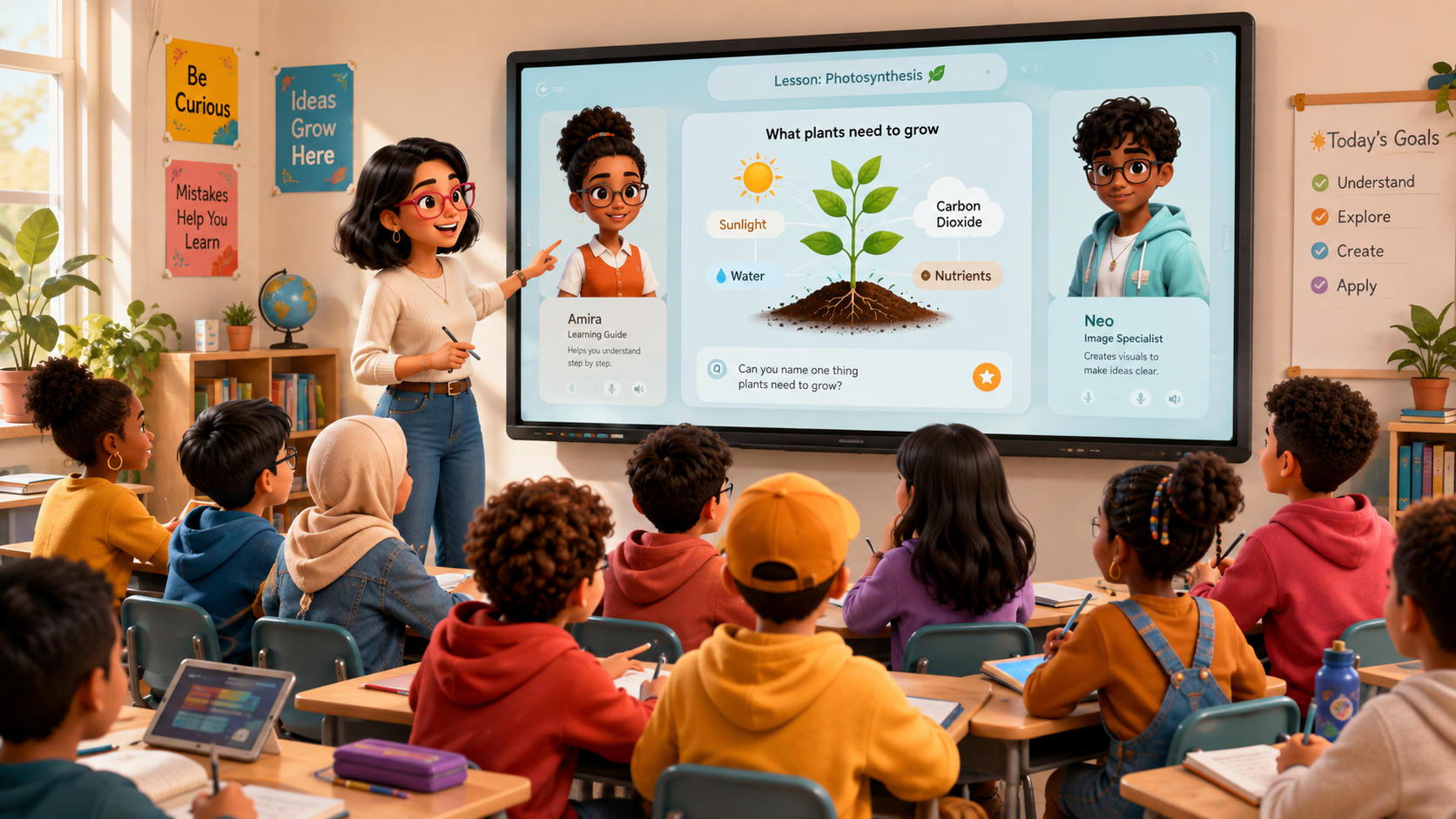
A teacher-governed classroom experience that turns shared objectives into responsive learning paths and personalized feedback each student can use.
Personalized feedback, teacher-governed
01
The classroom context
Teacher authority is part of the product.
Flowst School begins with the curriculum and objectives a teacher chooses. AI can help prepare and adapt, but it does not decide what belongs in the classroom.
Teachers approve content before students receive it
Objectives keep every activity academically grounded
Boundaries remain visible and changeable
02
The experience
From curriculum to the next teaching decision.
Each part of the workflow is designed to give teachers leverage without giving away control.
01
Start with your curriculum
Upload trusted material and define the learning objectives students need to reach.
02
Prepare without starting from scratch
Miro organizes grounded context and drafts the lesson structure around those objectives.
03
Review before students see it
Teachers approve the lesson, visuals, activities, and academic boundaries.
04
Teach with classroom assistance
Amira supports explanations while Neo creates diagrams and interactive ways into the idea.
05
Continue beyond the lesson
Send objective-linked practice that carries the classroom context forward.
06
See the learning behind the score
Kai surfaces recall, explanation quality, misconceptions, and where support is still needed.
07
Give feedback the learner can use
Show what is secure, what needs attention, and a focused next step linked to the approved objective.
08
Make the next decision
The teacher chooses whether to continue, reinforce, adjust, or intervene.
03
Personalized feedback
Personalized for each learner. Governed by the teacher.
Within teacher-approved learning objectives, Flowst uses evidence from each student's current work to provide feedback they can act on. Students see what they understand, where their thinking needs attention, and what to try next, while the teacher retains authority over goals, expectations, and classroom decisions.
Connect feedback to teacher-approved objectives
Distinguish secure understanding from unclear or incomplete thinking
Recommend a focused next step while keeping the teacher in control
04
Evidence and safeguards
Useful signals, held inside clear boundaries.
Classroom evidence should help a teacher decide what to do next. It should not reduce a learner to a score or expose academic records publicly.
Evidence remains linked to the approved objective
Learner records stay private
Teachers choose the next instructional response
Tell us about your curriculum, learners, and the classroom problem you want to solve.
Explore a teacher-governed Flowst School experience.